
English Bits – Finding the Right Fit for Your Horse
Posted by Mary's Tack and Feed on 29th Apr 2026
If you’re looking for a new bit for your horse, knowing the right size and pieces to use can be daunting! In this article, we’ll go over the broad strokes of how to size your horse’s mouth, and identify what pieces suit your needs!
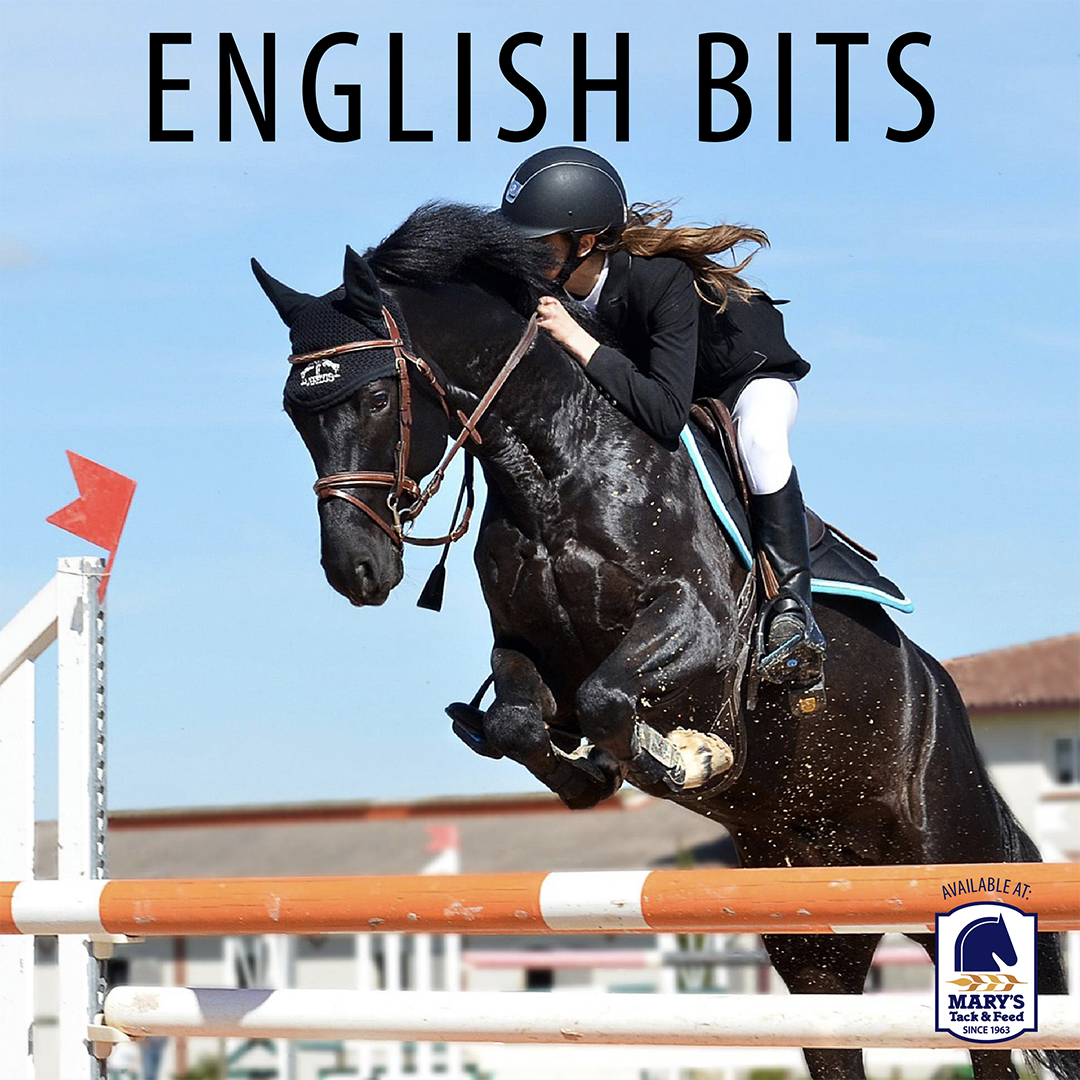 English bits are incredibly versatile, but are essentially made up of a mouthpiece,and bit rings. Different bit shapes have different effects on each horse. For example: direct bits, like a snaffle, limit the pressure to the horse’s mouth, while leverage bits can apply additional pressure to the horse’s poll and chin. Leverage bits include curb or gag bits, which tend to be more severe, and require the rider to have a softer hand.
Different horses require different bit types to accommodate their mouths and behaviors. The bit for a slow and steady school horse won’t look the same as the bit for a hot-headed jumper. If you’re ever unsure about how a bit will affect your horse, Mary’s Tack and Feed offers English and Western bit rentals so you can get a stress-free trial for your next new bit.
Mouthpieces
In the world of bits, there are so many different kinds of mouthpieces. Here are some common mouthpieces and their functions:
Jointed:
A bit can have a single joint, such as the Satinox Jointed Dee, or a double joint, like a Myler French Snaffle. This mouth piece is smooth and gentle in the horse’s mouth. Some mouth pieces, like the Herm Sprenger KK Dring have sweet copper for extra salivation and a softer mouth feel. For horses that need a little more get-up-and-go, a jointed mouthpiece is a great option.
Wire Twist:
Wire twist mouthpieces are comprised of two thick wires wrapped tightly around each other. This makes the bit much more severe because the mouthpiece is smaller in diameter, and also has many ridges that create additional pressure in the corners of the horse’s mouth, meaning they’ll notice even the slightest tug on the reins. Wire twists like the Curved Twisted Copper Wire King Dee and Double Twisted Wire Full Cheek work best for hot horses and experienced riders. We recommend having a softer hand when using a wire twist to avoid irritating your horse’s mouth.
Waterford:
A waterford is a great bit for strong horses who like to clamp down and push against the bit. The multiple joints and ball-shaped links are more inclined to move and shift in the horse’s mouth, preventing the horse from biting and leaning in one direction. Bits like Jump’In’s Copper Toy Waterford Dee or Toklat’s Waterford Hunt Dee are a great training tool for horses that bulge or lean heavily, and help correct imbalance in their movements.
Mullen:
For a stable and solid mouthpiece, look no further than a Mullen. This is typically a straight bar of metal, but some bits, like a happy mouth mullen, or a Stubben’s Fine Line bit are coated in a softer substance to provide extra flexion and a softer feel of your horse’s mouth. Mullens are considered a milder mouth piece that allows for less pressure on your horse’s tongue.
Non Metal Mouth Pieces:
For horses whose mouths are sensitive to metal, there are softer alternatives like plastic and rubber mouth bits. Stubben’s Fine Line Bits are a series of mullen bits that are made with a flexible material rather than metal. This provides more precise control for the rider, and comfort for the horse.
Happy mouth bits like the Jointed Dee, Nathe bits like the D-Ring Snaffle Bit , and Rubber bits like the Soft Rubber Mullen Pelham from Toklat are all soft bit alternatives that are gentle on your horse’s mouth, and still get the job done. Just keep in mind that these bits are not eligible for Mary’s Bit Trial program, as they are made of softer material and can be damaged by horses that chew excessively. With that being said, chewing can be a sign of discomfort. If this is the case, your horse may require a visit from the dentist.
Bit Rings
Bit Rings are the pieces that sit on either side of the mouthpiece, and are where the bit attaches to the bridle and reins. A bit ring’s function can vary depending on design, but one of the most vital roles is preventing the mouthpiece from sliding out the sides of the horse’s mouth.
Direct bits only exert pressure on your horse’s mouth, bars (the gap in the horse’s teeth where the bit sits), and tongue. Bit rings like a loose ring, a D-ring, a full cheek, and an Eggbutt all qualify as pieces of a direct bit. Let’s unpack what these rings do.
Loose Ring:
Loose ring bits like the Shires Blue Alloy Lozenge have circular rings that are able to rotate through the mouthpiece. This allows a flexible sliding motion that softens the horse’s mouth and promotes chewing instead of bracing. This also allows the rider more control as the horse will feel your command in the bit rings before pressure affects the mouthpiece. Some people use bit guards with loose rings to prevent pinching, however if your bit is sized properly, this shouldn’t be an issue.
D-Ring:
Take one look at the Pro Series Derby, Nathe D-Ring Snaffle, and Stubben Waterford bits and you’ll be able to guess what type of ring they use. A D-Ring bit is easy to spot because it's quite literally shaped like a D! Unlike the loose ring, this bit is hinged, with the bars on either side preventing the bit from being pulled through the horse’s mouth. This design creates a stabilizing effect by providing an edge on the outside when giving a command to turn in. For horses that need an outside edge through a turn, try a D-Ring.
Full Cheek:
A full cheek bit like the Coronet Players Snaffle or the Korsteel Jointed are great for giving strong lateral signals to your horse. With bars that extend up and down each side of the bit ring, a full cheek bit has a similar function to a D-ring that will help clearly communicate how your horse should turn.
The full cheek is a versatile side ring choice. If you don’t use bit keepers, it has a similar effect on your horse’s mouth to a D-Ring, providing clear, lateral commands. However if you use bit rings to hold the bars in place, it applies extra pressure to the mouthpiece, creating a stronger bit for a stronger horse.
Eggbutt:
An eggbutt bit ring is hinged and round, creating the egg-shape that it’s named after. This is considered a mild bit, which is good for cool-headed, evenly balanced horses. Bits like Centaur Twisted Snaffle, Jump’In Roller Mouth, and Neue Schule Tranz Angled Lozenge eggbutts are popular among hunter riders, however horses have different preferences regardless of discipline.
Leverage Bits
Bits that use side rings like Gags and Pelhams are considered leverage bits because they create additional leverage that affects the horse’s poll and chin. Leverage bits allow more specific commands, like raising the horse’s head and tucking their chin. These bits are stronger than direct bits like a snaffle, and require you to have a soft, clear hand.
Pelham Bit:
Pelham bits are technically a combo bit because it can be used like a snaffle, but can also create additional leverage if needed. Pelhams come with a shank that puts additional pressure on the horse’s poll, and attached to the shank are additional rings to attach a set of curb reins. Pelhams also have curb chains that apply pressure under the horse’s chin, causing the horse to lift their head. Should your horse get a little too strong, you have the option to tug on the draw rein and activate the curb chain. Bits like Jack’s Copper Roller Pelham and Toklat’s Tom Thumb Jointed Rubber Pelham are classic examples of a typical pelham bit.
Gag Bits:
Whether you’re using a Centaur Three-Ring Gag, a Stubben Silver Wing Gag, or a Nathe Gag, gag cheek bits more or less have the same function. Gag rings use leverage to raise the horse’s head. This is a useful tool if your horse likes to lean down and pull against the bit. This makes the gag a good training bit for horses that pull against your hand.

Even after going through the common types of bits, there are still a myriad of English bits that are available to try at Mary’s Tack and Feed! Just come speak to one of our bit specialists, and we’ll help steer you in the right direction. Also don’t forget to ask about our Bit Trial Program as well! Trying out a bit gives yourself, your horse, and your trainer a stress-free chance to evaluate which English bit is the best fit for you and your horse.
Related Blogs: